
What Is Trenching? How Utility Trenches Are Dug Safely
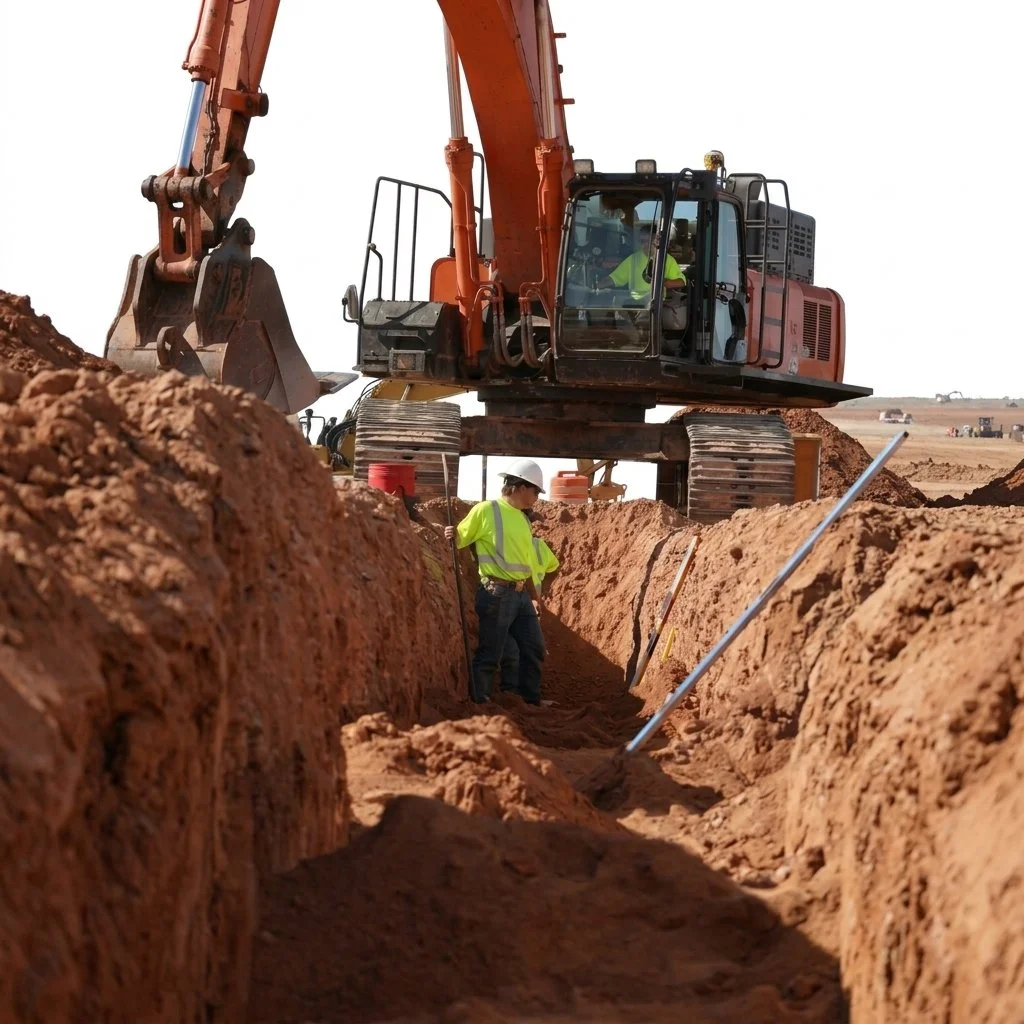
Turn on a tap and water comes out. Flip a switch and the light comes on. It feels simple. But the pipes and wires that make it happen are hidden under your yard, and each one got there the same way. Someone dug a trench.
So what is trenching, and why does it take so much care? This guide explains it in plain words.
What Is Trenching?
Trenching is digging a long, narrow cut in the ground. A trench is deeper than it is wide. That shape is what makes it different from other digging, like a wide hole for a basement or a pool.
A trench only needs to be wide enough for the pipe or wire going in and for a worker to do the job. Keeping it narrow means less dirt to move and less yard to repair afterward.
What Trenches Are Used For
On a home site, most trenches carry something a house cannot work without:
Water lines
Sewer lines
Power lines and conduit
Gas lines
Phone, cable, and fiber internet
Sprinkler and drainage pipes
This kind of work is often called utility trenching. It is a big part of underground utility installation on any new build.
The Main Types of Trenches
Not every trench has straight walls. The shape depends on the soil and the depth.
Straight trench. The walls go straight down. This works for shallow cuts in firm ground.
Sloped trench. The walls lean back, away from the bottom, so loose dirt cannot fall in.
Benched trench. The walls are cut into steps, like a small staircase on each side.
Shielded trench. A steel box sits inside the trench to protect the workers.
How a Utility Trench Is Dug, Step by Step
1. Mark the lines that are already there
Before any digging, the crew calls 811. In Utah, this service is called Blue Stakes. Workers come out and mark buried lines with paint and flags. Each color means something. Red is power. Yellow is gas. Blue is drinking water. Green is sewer.
2. Plan the route and the depth
Each line has its own rules for how deep it must sit. Sewer pipes also need a steady downhill slope so waste keeps moving. The route is planned to miss other lines, trees, and future buildings.
3. Dig the trench
An excavator or a trenching machine cuts the trench. The dirt that comes out is piled back from the edge, so it cannot slide back in.
4. Prepare the bottom
A layer of sand or fine gravel goes in first. This is called bedding. It gives the pipe a smooth, even bed with no sharp rocks pressing on it.
5. Lay the pipe and get it checked
The pipe or conduit goes in, and the joints are sealed. Many lines must be looked at by an inspector before they are covered.
6. Fill it back in
Dirt goes back in thin layers, and each layer is packed down. If the dirt is dumped in all at once, the ground sinks later and leaves a dip across the yard or driveway.
Why Trenching Can Be Dangerous
A trench looks harmless. It is not. The biggest danger is a cave-in. Soil is very heavy. A single cubic yard can weigh as much as a small car. If a wall gives way, there is no time to get out of the way.
Other risks include hitting a buried gas or power line, water filling the trench, and equipment working too close to the edge.
How Crews Keep a Trench Safe
Safety rules for trenches are set by OSHA, the national agency for workplace safety. Good crews follow these steps on every job:
Trenches five feet deep or more need protection, such as sloped walls, bracing, or a steel trench box.
Trenches four feet deep or more need a ladder or ramp close by, so workers can get out fast.
Dug-out dirt and tools stay at least two feet back from the edge.
A trained person checks the trench every day, and again after rain.
You can read more about buried lines in our guide to underground utility safety.
Trenching in Southern Utah Ground
Our ground makes this work harder than it is in many places. Around St. George, a trench may pass through three kinds of ground in a single yard.
Rock. Lava rock and sandstone cannot be scooped out. They must be broken with a hammer tool or cut with a rock saw.
Sand. Loose, sandy soil looks easy to dig, but the walls fall in quickly.
Clay. Some clay swells when wet and can squeeze or shift a pipe over time.
Summer storms add one more problem. An open trench can fill with water and mud in minutes, so crews try not to leave trenches open longer than needed.
Should You Dig Your Own Trench?
A shallow trench for a sprinkler line is a fair weekend job. Still, call 811 first. It is free.
Deeper trenches for water, sewer, power, or gas are different. They need the right depth, the right slope, an inspection, and safe walls. If you are connecting a new home to city services, our guide on how to tap into a city sewer line shows what is involved.
Frequently Asked Questions
What is the difference between trenching and excavation?
Excavation means any digging. Trenching is one kind of excavation, where the cut is long, narrow, and deeper than it is wide.
How deep is a utility trench?
It depends on the line and the local code. Many home lines sit between one and four feet deep. Your city or utility company sets the exact depth.
Do I need to call 811 for a small trench?
Yes. It is free, and it protects you from hitting a gas or power line. Call a few business days before you plan to dig.
Can a trench be dug through rock?
Yes. It takes a hydraulic hammer or a rock saw, and it takes more time than digging in soil.
How long does trenching take?
A short trench in soft soil can be done in a day. Long runs, rock, and inspections add time.
Need a Trench Dug the Right Way?
Creative Excavating has been installing underground utilities in Southern Utah since 2005. We know the rock, the sand, and the local rules. Call 435-627-9449 to talk about your project.
