
Septic System Installation in Southern Utah: What Homeowners and Builders Should Know
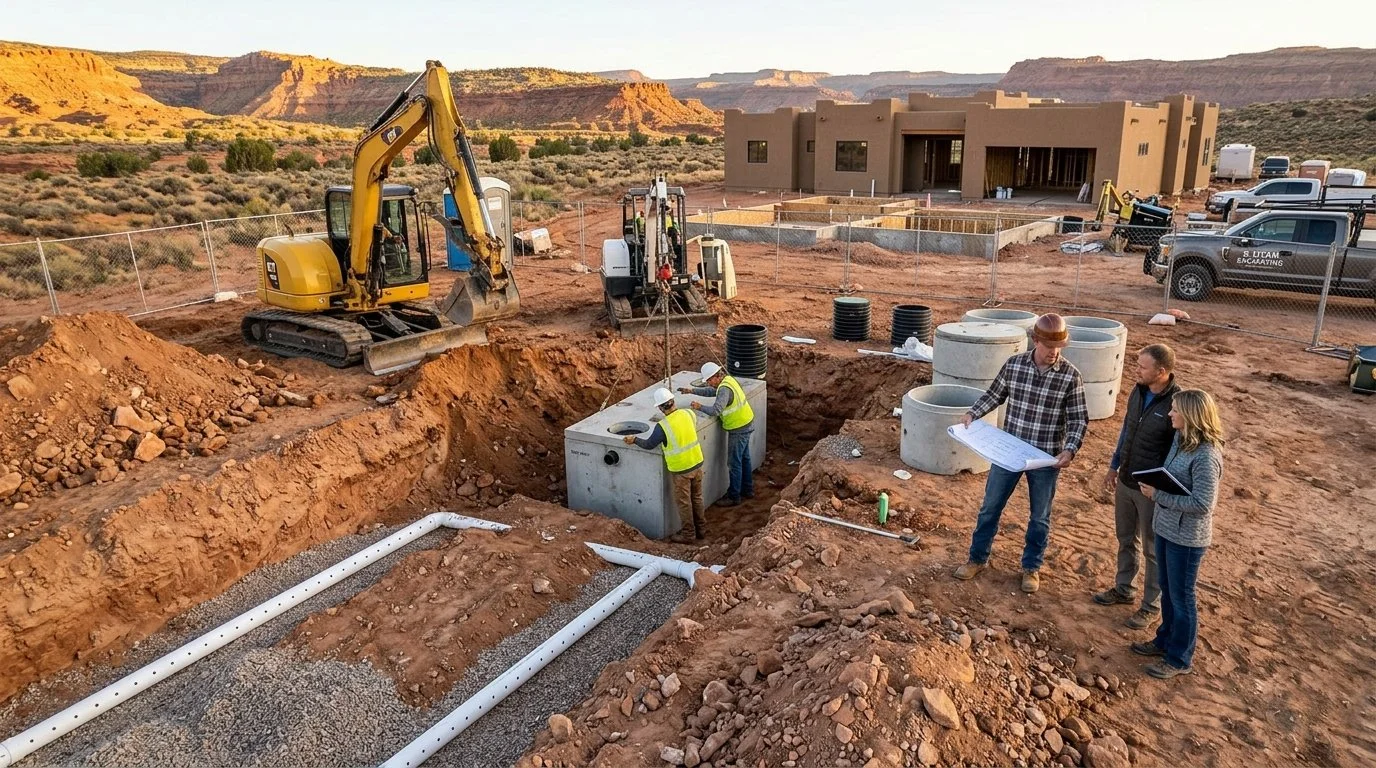
Not every property in Southern Utah is connected to a municipal sewer line. Rural lots, larger acreages, and properties on the outer edges of St. George's growth often rely on septic systems instead, and installing one correctly is a much more technical process than most homeowners expect. Septic system installation in St. George, Utah involves soil evaluation, precise excavation, and strict adherence to local environmental codes, all of which affect how well the system performs for decades to come.
Why Septic Installation Is More Than Just Digging a Hole
A septic system is essentially a self-contained wastewater treatment system for a property that does not have access to a municipal sewer connection. It has to safely process everything a household sends down the drain, filter it through the soil, and do so without contaminating groundwater or creating problems on the surface of the property.
Because of that responsibility, septic tank excavation is not a job that tolerates guesswork. Soil conditions, tank placement, drain field sizing, and local code all have to align correctly, or the system can fail prematurely, requiring expensive repairs or even a full replacement years earlier than it should.
Understanding Soil Conditions Before You Install
Before any excavation begins, soil evaluation is one of the most important steps in the process. The soil on a given lot determines how well wastewater will filter and drain once it reaches the leach field. Dense or poorly draining soil may require a larger drain field, additional design considerations, or in some cases a different type of septic system altogether to compensate for the ground's limitations.
Skipping this evaluation, or relying on assumptions instead of an actual soil analysis, is one of the most common reasons septic systems underperform. A system designed around real site conditions lasts significantly longer and requires far less maintenance over its lifetime than one installed based on guesswork.
Tank Placement and Excavation
Once soil conditions are understood, the septic tank itself has to be placed at the correct depth and distance from the home, property lines, wells, and any water sources on the property. Local code sets minimum distances for all of these to protect both the household and neighboring properties from contamination risk.
Septic tank excavation requires heavy-duty equipment capable of digging precisely to the required depth while accounting for the tank's size and the piping that will connect it to both the home and the leach field. Precision matters here. A tank that sits even slightly off level or at the wrong depth can create drainage issues from day one.
What Septic Leach Field Construction Involves
The leach field, sometimes called a drain field, is where treated wastewater from the tank is dispersed safely back into the soil. Leach field construction involves digging a series of trenches, typically filled with gravel and perforated pipe, designed to allow wastewater to filter through the soil gradually and safely rather than all at once.
The size and layout of the leach field depend heavily on the soil evaluation completed earlier in the process. Poorly draining soil requires a larger field to compensate, while well-draining soil may allow for a more compact design. Getting this sizing right the first time avoids the far more expensive problem of a failing or overloaded drain field years down the road.
How Long Septic Installation Typically Takes
Homeowners and builders often ask how long the overall process takes from start to finish. While every project varies based on lot size, soil conditions, and permitting timelines, the excavation and installation itself is usually completed within a matter of days once permits are in hand and materials are on site. The bigger variable tends to be the permitting and design phase, which can take longer depending on the county's review process and how quickly soil testing results come back.
Planning ahead and starting the permitting process early is one of the best ways to keep a septic installation on schedule, particularly for new construction where the septic system needs to be ready before other site work can move forward.
Permits and Local Code in Southern Utah
Septic systems in Washington County and the surrounding area are regulated to protect groundwater and public health, and permits are required before installation begins. The permitting process typically involves submitting soil evaluation results, a proposed system design, and site plans for review before work can start.
Because these requirements can vary depending on the specific jurisdiction and site conditions, working with a contractor who regularly navigates this process locally helps avoid delays. Creative Excavating works directly with the appropriate local offices throughout the septic installation process to keep projects moving without unnecessary holdups.
Septic Installation for Rural Properties
Rural properties across Southern Utah present their own set of considerations. Larger acreages may have more flexibility in where a system can be placed, but they can also come with less predictable soil conditions, greater distances from utility access, and site access challenges that affect how equipment reaches the installation area.
Whether a project involves a single rural home or a larger property with future expansion in mind, planning the septic system with room for the property's long-term use in view helps avoid the need for costly system upgrades later.
Why Work With Creative Excavating
Creative Excavating has handled septic tank excavation and leach field construction across residential and rural properties throughout Southern Utah for close to two decades. We manage every stage of the process with attention to compliance, long-term performance, and clear communication, so homeowners and builders know exactly what to expect from soil evaluation through final installation.
If you are planning new construction on a property without sewer access, or dealing with an aging septic system that needs replacement, reach out to Creative Excavating for a straightforward assessment of what your property needs.
Frequently Asked Questions
How do I know if my property needs a septic system instead of a sewer connection?
If a property is not within reach of a municipal sewer line, which is common in rural areas and some outer lots around St. George, a septic system is typically required. A local contractor or the county can confirm sewer availability for a specific address.
What does septic leach field construction actually involve?
It involves digging a network of trenches filled with gravel and perforated pipe that allow treated wastewater from the septic tank to filter safely back into the soil over time.
How long does the septic installation process take?
The physical installation is usually completed within a few days once permits are approved, though the overall timeline depends heavily on soil testing and the local permitting process, which can take longer.
Do I need a permit to install a septic system in Washington County?
Yes, septic systems require permits based on soil evaluation and a system design that meets local code before installation can begin.
Why does soil testing matter so much for septic systems?
Soil conditions determine how well the leach field can filter wastewater. Poorly draining soil requires a larger or differently designed system, and skipping this evaluation is one of the leading causes of premature septic failure.
Can Creative Excavating install septic systems on rural or larger acreage properties?
Yes, we handle septic installation for both standard residential lots and larger rural properties, taking site access, soil conditions, and long-term property use into account during planning.
