
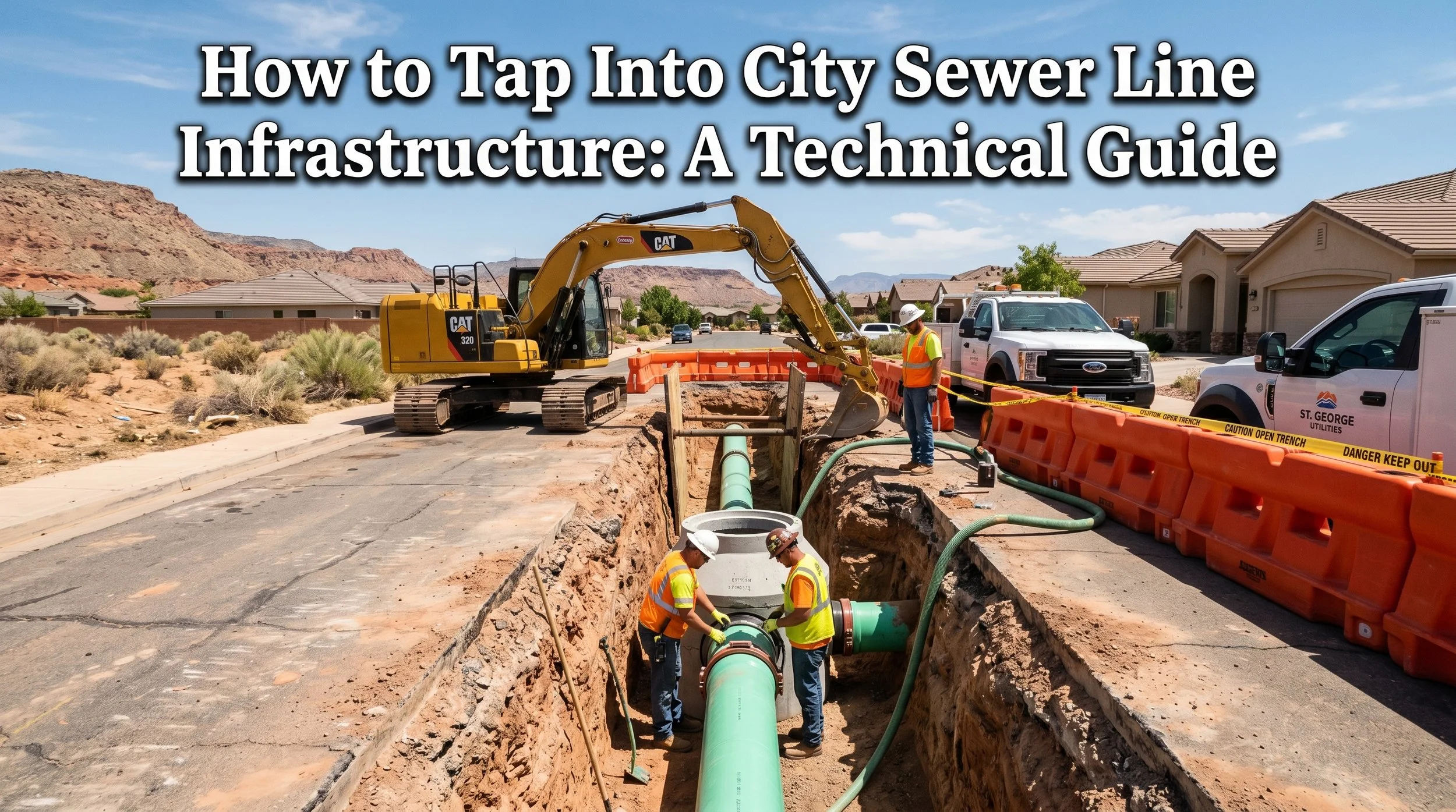
For developers and homeowners embarking on new construction or major property renovations in Washington County, connecting to municipal infrastructure is one of the most critical phases of the project. Understanding how to tap into city sewer line networks requires more than just a shovel and a permit. It involves a sophisticated coordination of civil engineering, heavy machinery, and strict adherence to city codes to ensure that the waste management system of a new building integrates seamlessly with the existing public main.
In the world of St. George land development, the process of installing utilities is often the "make or break" moment for a project timeline. A failed inspection or a damaged municipal line can result in massive fines and months of delays. This guide provides a deep look into the professional standards for a sewer line tap, the logistics of utilities excavation, and the engineering required to keep Southern Utah growing safely.
The Fundamentals of Municipal Connectivity: What is a Sewer Tap?
Before breaking ground, it is essential to answer the basic technical question: what is a sewer tap? In professional plumbing and excavation, a tap is the physical connection point where a private lateral line (the pipe coming from your home or business) meets the public sewer main. This connection is the gateway for all wastewater to exit your property and enter the city’s treatment system.
Establishing a sewer main tap is a highly regulated event. Unlike interior plumbing, the tap occurs within the public right of way, meaning the city has a vested interest in ensuring the work is done perfectly. If a tap is performed poorly, it can lead to groundwater infiltration, which overwhelms treatment plants, or structural blockages that can back up an entire neighborhood block. Because of these risks, most municipalities in Southern Utah require that only licensed, bonded, and insured excavation contractors handle the actual connection to the public main.
Navigating Engineered Utility Plans and Permitting
No modern excavation project begins without a roadmap. For any project involving underground utilities St. George Utah, the first step is the creation and approval of engineered utility plans. These blueprints are drafted by civil engineers to show the exact elevation, pitch, and location of the new lines in relation to existing city infrastructure.
In St. George, these plans must account for the unique geological challenges of the region, such as high water tables in certain valleys or the presence of volcanic rock. The engineering team must calculate the "slope" or "grade" of the sewer lateral. Since sewer systems typically rely on gravity, the pipe must drop a specific number of inches for every foot of horizontal distance. If the grade is too shallow, solids will settle and cause clogs; if it is too steep, liquids will outrun solids, also leading to blockages. Approving these plans with the city utility department is a prerequisite before any utilities excavation can commence.
The Precision Phase: Underground Utilities Excavation
Once the permits are in hand and the "Blue Stakes" have marked existing underground lines, the heavy work begins. Underground utilities excavation is a game of inches. An excavator operator must be able to feel the ground and monitor depth gauges constantly to avoid striking other buried assets like fiber optic cables, gas lines, or water mains.
Safety Protocols in Trenching
Safety is the primary concern during utility line trenching. Because sewer mains are often buried deep—sometimes ten feet or more below the surface, the risk of trench collapse is a lethal reality. Professional teams use trench boxes or shoring equipment to protect workers while they are inside the cut. In Southern Utah excavation projects, the stability of the soil can change rapidly from dense clay to loose sand, making these safety measures non-negotiable.
Managing the Dig Path
The path from the building to the street must be cleared of all obstructions. This often involves removing large boulders, old tree roots, or even existing abandoned pipes. The excavator carves a clean, flat bottomed trench that follows the exact path laid out in the engineered utility plans. Any deviation from this path can ruin the gravity flow of the sewer and water systems, necessitating a complete re-dig of the site.
Executing the Sewer Main Tap and Connection
The actual "tapping" of the main is a surgical procedure in the world of heavy construction. There are several methods for performing a sewer line tap, depending on the material of the city main (such as PVC, clay, or concrete) and the size of the new lateral line.
One common method involves using a "saddle" or a "wye" connection. The contractor carefully exposes the city main and cleans the exterior surface. A specialized hole saw is used to cut an opening into the top or side of the public pipe. A gasketed saddle is then bolted or strapped around the main, creating a watertight seal where the new lateral can be inserted. Throughout this process, city inspectors are often on site to verify that the seal is perfect and that no debris has fallen into the public line during the cut. This level of oversight is why quality excavation in St. George Utah is so highly valued by local developers.
Backfilling and Site Development Utilities Management
After the connection is made and the pipes have passed a pressure test or a "leak test," the trench must be closed. This is a critical step in site development utilities that many inexperienced contractors rush through, leading to sunken driveways or broken pipes later on.
Bedding the Pipe
The pipe cannot simply be covered with raw dirt. It must be "bedded" in a specific material, usually sand or fine pea gravel. This bedding surrounds the pipe and protects it from the pressure of the soil above. It also prevents sharp rocks in the native soil from puncturing the line during the compaction process.
Structural Backfilling and Compaction
Once the pipe is bedded, the rest of the trench is filled in "lifts" or layers. Each layer is mechanically compacted to ensure the ground returns to its original density. This is especially important if the sewer line tap was performed under a future roadway or sidewalk. Proper compaction prevents the ground from settling, which would otherwise create a dangerous and unsightly dip in the pavement. In St. George land development, meeting these compaction standards is a requirement for the city to "sign off" on the project and issue a certificate of occupancy.
Why Professional Southern Utah Excavation Matters
Attempting to manage installing utilities without a professional partner is a recipe for disaster. The technical requirements for underground utilities St. George Utah are among the strictest in the state due to the rapid growth of the region and the need to protect the integrity of the public infrastructure.
A professional contractor brings more than just a machine to the site; they bring a deep understanding of local soil conditions and a relationship with city inspectors that helps keep the project moving. Whether you are dealing with a complex sewer main tap on a commercial site or a simple residential lateral, the precision of the excavation determines the long term health of your property.
Protecting Sewer and Water Systems
By investing in quality excavation St. George Utah, you are protecting the most vital parts of your building. A well installed sewer line can last for fifty to one hundred years without issue. Conversely, a poorly installed line might fail within five years, requiring you to dig up your landscaping and driveway to fix a problem that should have been handled correctly during the initial utilities excavation.
Frequently Asked Questions
-
The property owner is typically responsible for all costs associated with the lateral line and the physical connection to the city main, including permit fees and contractor labor.
-
While the actual connection might only take a few hours, the entire process of excavation, tapping, inspection, and backfilling usually takes one to two full workdays.
-
In Southern Utah, hitting rock is common. Professional excavators use hydraulic hammers or "ho-rams" to break through the rock and maintain the required pipe depth and grade.
-
The city requires these plans to ensure that your new line will not interfere with existing utilities and that the gravity flow meets health and safety standards.
-
The depth is dictated by the city’s frost line and the elevation of the city main. Your contractor will use laser levels to ensure every inch of the pipe is at the correct depth.
