
Blue Clay Soil and Basement Excavation: What Southern Utah Homeowners Should Know Before They Dig
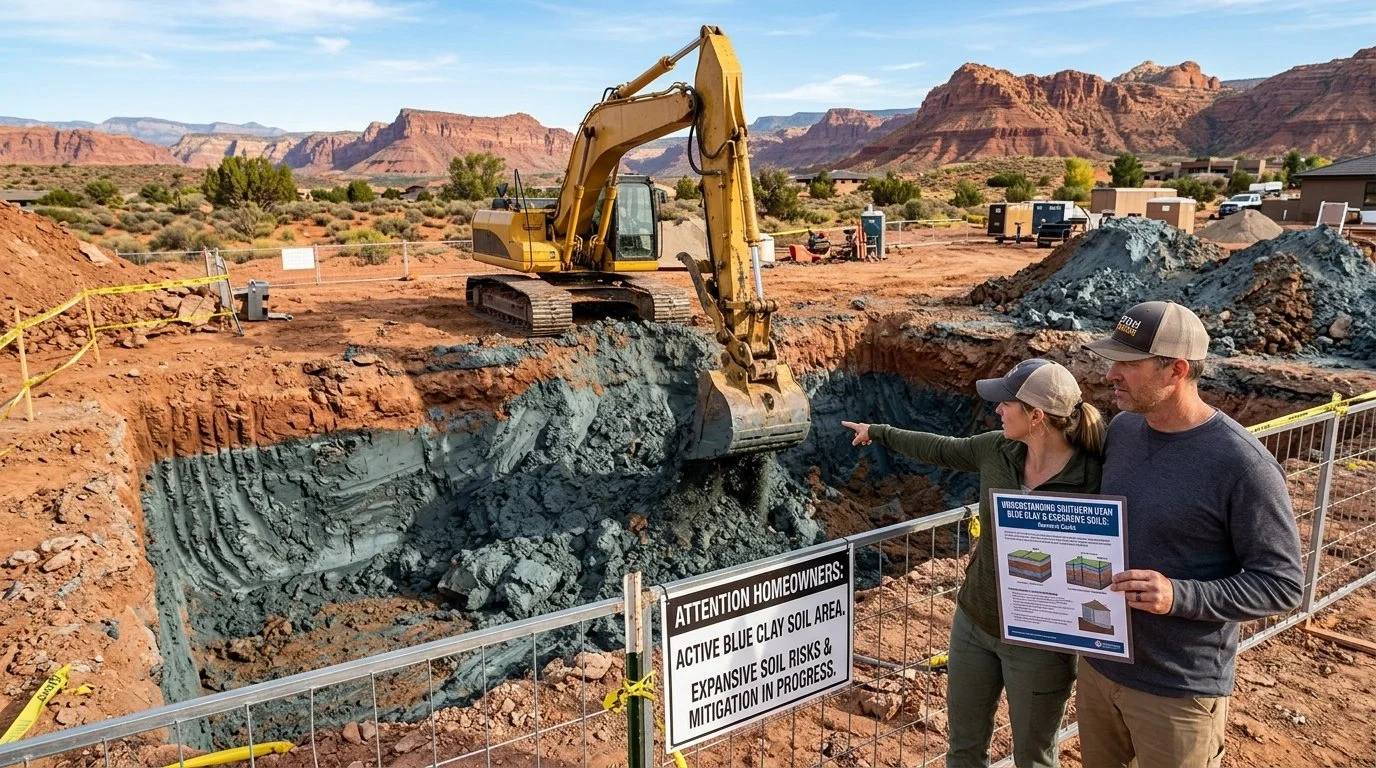
Adding a basement is one of the most popular ways Southern Utah homeowners gain extra square footage, and for good reason. A basement provides valuable living space along with natural insulation from our long, intense summers, giving families a cooler retreat that upper floors simply cannot match. But before a single shovel of dirt moves, there is one factor that can make or break a basement project in this part of the state: the soil itself. As a contractor handling basement excavation in St. George, Utah for nearly two decades, Creative Excavating has learned firsthand how much the ground beneath a lot dictates the entire plan.
The Blue Clay Problem
Southern Utah sits on some notoriously difficult soil, and one of the most common culprits behind foundation and basement issues in this region is expansive blue clay. This type of soil absorbs moisture and swells significantly, then shrinks again as it dries out. That swelling and shrinking cycle is exactly what causes problems for anything built on top of it.
If a foundation or basement floor is poured while the clay is swollen with moisture, the soil will eventually dry and shrink back down, and the structure above it can settle or even collapse to roughly the same degree the soil originally expanded. This is not a minor cosmetic issue. It is a structural risk that can affect a home for decades if it is not addressed correctly at the excavation stage.
Why a Soil Report Matters Before You Buy or Build
Because blue clay is so unpredictable without direct testing, we strongly recommend a soil report before finalizing plans for a basement, and ideally before closing on a lot at all. A soil engineer takes samples from the property to determine exactly what type of soil is present, how deep the problematic layers run, and what kind of preparation the site will need.
Skipping this step is one of the most expensive mistakes a homeowner or builder can make. It is far better to know what a lot requires before committing to a purchase price or a construction budget than to discover blue clay issues mid-project, when options are limited and costs have already started stacking up.
What Over-Excavation Actually Involves
When blue clay is confirmed on a property, the most reliable solution is over-excavation. This means digging out the problematic clay layer well beyond the standard basement depth, sometimes as deep as 14 feet, until stable soil is reached. From there, the hole is backfilled in controlled lifts, typically every 12 inches, using proper structural fill material that is compacted at each stage rather than dumped in all at once.
This process takes significantly more time, equipment, and material than a standard basement dig. A soil engineer will test the bottom of the excavation once it is complete to confirm the crew has reached soil that will not create the same swelling and shrinking problem down the road. It is a meticulous process, but it is the difference between a basement that lasts the life of the home and one that develops cracks, uneven floors, or worse within a few years.
Elevation, Drainage, and Sewer Considerations
Digging a basement is not just about depth. The elevation of the existing sewer line plays a major role in how deep a basement can realistically go. If a home is set too deep and the finished grade of the basement sits below the elevation the sewer line requires for proper gravity drainage, a sewer pump may be necessary to move wastewater out of the home.
Drainage across the lot as a whole also has to be considered carefully, especially in Southern Utah where flash flooding is a real seasonal risk, typically from June through August. A lot's topography determines how water moves across the property, and a basement excavation plan needs to account for that from day one, not as an afterthought once the structure is already framed.
Walkout Basement Excavation on Sloped Lots
Many Southern Utah properties sit on sloped terrain, which makes walkout basement excavation a popular option. A walkout basement uses the natural grade of the lot to create a basement level with direct outdoor access on one side, rather than a fully buried basement accessible only from inside the home.
Walkout designs require careful planning around elevation, drainage, and often retaining walls to manage the exposed slope on either side of the walkout. Getting the excavation and grading right from the start makes the difference between a walkout basement that feels like a natural extension of the home and one that creates ongoing drainage or erosion issues around the exposed foundation walls.
How Creative Excavating Approaches Basement Digs
Every basement excavation project we take on starts with understanding the soil, not just the blueprint. We coordinate closely with soil engineers, review reports before committing to a depth and plan, and communicate honestly with clients when a lot is going to require over-excavation rather than a standard dig.
Our crews are experienced with the technical demands of foundation excavation across Southern Utah's varied terrain, from straightforward pads to the tight, careful digging required for basements close to existing structures or steep slopes. We aim to give homeowners and builders a clean, construction-ready excavation that meets both architectural plans and the structural realities of the ground it sits on.
Talk to Us Before You Dig
If you are planning a basement addition, purchasing a lot with an eye toward future construction, or dealing with signs of settling in an existing structure, the earlier you bring in an excavation team, the more options you have. Creative Excavating offers free estimates and can help you understand what a specific lot will require before you are locked into a budget or timeline.
Frequently Asked Questions
What is blue clay and why is it a problem in Southern Utah?
Blue clay is an expansive soil common in parts of Southern Utah that swells when it absorbs moisture and shrinks as it dries. That cycle can cause foundations and basements built on top of it to settle or crack over time if it is not properly excavated and replaced.
Do I need a soil report before building a basement?
Yes. A soil report identifies whether problematic soil like blue clay is present and how deep it extends, which allows a realistic excavation plan and budget to be set before construction begins rather than after problems appear.
How deep does basement over-excavation typically go?
In areas with significant blue clay, over-excavation can reach up to around 14 feet before stable soil is found. The exact depth depends on the specific site and is confirmed through soil testing during the dig.
What is a walkout basement and does it require different excavation?
A walkout basement uses a sloped lot to provide direct outdoor access from the basement level. It typically requires more detailed grading and drainage planning, and often retaining walls, compared to a fully buried basement.
How does the sewer line affect basement depth?
The elevation of the existing sewer line determines how deep a basement can go while still draining properly by gravity. If the basement sits below that elevation, a sewer pump may be required.
Why does drainage planning matter so much for basement projects in this region?
Southern Utah experiences flash flooding, particularly in summer months, and a lot's topography determines how water moves around a structure. Poor drainage planning during excavation can lead to water problems around the foundation later.
