
Residential Driveway Excavation: Preparing the Perfect Base for a Long-Lasting Driveway
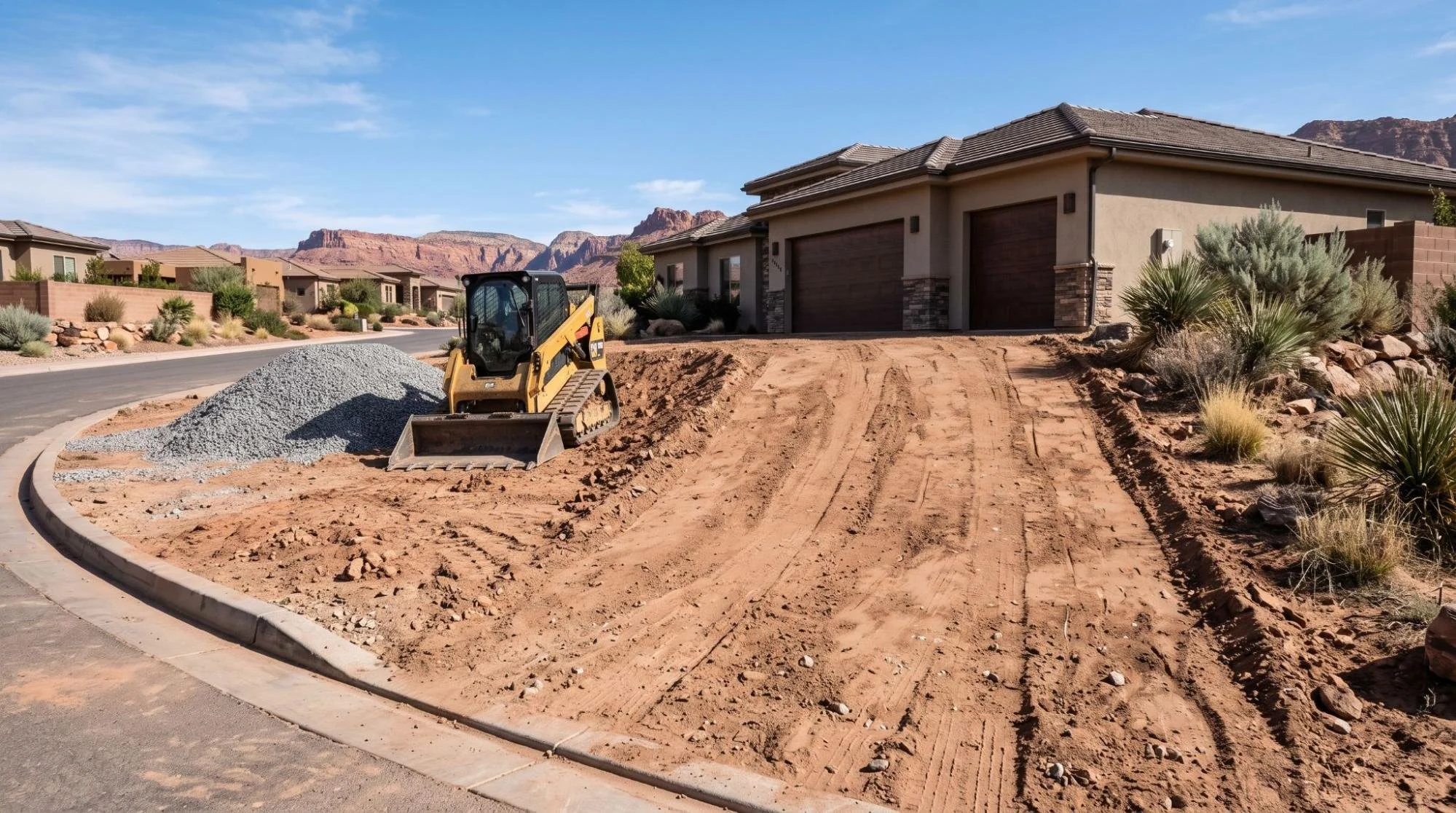
A driveway might seem like one of the simpler parts of a home build or renovation, but ask any contractor who has had to repair a cracked, sunken, or pooling driveway and they will tell you the same thing. Almost every driveway failure traces back to what happened, or did not happen, before the concrete or asphalt ever went down. That first step is driveway excavation, and it is the single most important factor in whether your driveway lasts five years or twenty five.
Whether you are pouring a new concrete driveway, laying asphalt, or installing a gravel drive, the work that happens below the surface determines everything that happens above it. Here is what homeowners across St George and Southern Utah should understand before starting a driveway project.
Why Driveway Excavation Matters More Than People Think
It is easy to assume a driveway is just a flat surface poured over dirt. In reality, a driveway is a structural element that has to handle vehicle weight, drainage, freeze thaw cycles, and years of exposure to sun and monsoon storms without cracking or shifting.
Driveway excavation involves removing existing vegetation, topsoil, and unsuitable material down to a stable subgrade, then shaping that ground to the correct depth and slope for whatever surface material is going on top. Skip or rush this step and you end up with a driveway that settles unevenly, cracks prematurely, or collects standing water every time it rains.
For homeowners planning driveway installation as part of new construction or a full replacement, understanding this process upfront helps set realistic expectations for both timeline and long term durability.
Driveway Grading and Why Slope Is Everything
Driveway grading is where the shape of your driveway actually gets established, and it is far more technical than simply leveling dirt.
Every driveway needs a slight slope, typically somewhere between one and two percent, to shed water toward an appropriate drainage point rather than toward your garage, foundation, or a neighboring property. Getting this land grading wrong is one of the most common and most expensive mistakes in residential driveway work, because fixing improper grading after concrete or asphalt is down usually means tearing it back out.
A qualified grading contractor accounts for the natural slope of your lot, the elevation of your garage or entry point, and where water needs to go once it leaves the driveway surface. This is not something that should be eyeballed. It is measured, planned, and verified before any base material goes in.
Driveway Site Preparation Step by Step
Understanding the general sequence helps homeowners know what to expect once work begins on their property.
Driveway site preparation typically follows a consistent process regardless of what final surface material is chosen. First, the area is cleared of vegetation, old pavement, or any unsuitable soil. From there, rough excavation removes soil down to the design depth, followed by fine shaping and sloping to match the engineered grade. Once the shape is correct, a proper base layer is installed and compacted in stages, and finally the site is inspected for grade and drainage before the surface material is scheduled.
Skipping steps in this sequence, especially compaction, is where a lot of driveway problems originate. A base that looks solid on day one can fail within a year or two if it was not compacted correctly in lifts rather than all at once.
Concrete vs. Asphalt vs. Gravel: Excavation Differences
Not every driveway surface requires the same excavation approach, and this is worth understanding before you choose a material.
Concrete driveway excavation generally requires a deeper, more precisely graded base because concrete is rigid and will crack if the ground beneath it shifts or settles unevenly. Asphalt driveway excavation allows slightly more flexibility since asphalt has some give, but still requires a well compacted, properly sloped base to avoid rutting and cracking over time. A gravel driveway base needs excavation down to a stable subgrade as well, with proper depth for base rock and a top layer, along with clear edging to keep material from spreading over time.
Each material has different tolerances, but none of them forgive a poorly prepared base. The excavation and grading work underneath is what determines how well any of these surfaces perform over the long run.
Subgrade Preparation and Soil Compaction
This is the part of the process that homeowners rarely see, but it is arguably the most important.
Subgrade preparation involves removing unstable or organic material and replacing or compacting the exposed soil to create a solid, uniform base. Once the subgrade is shaped correctly, soil compaction is performed in layers, or lifts, using appropriate equipment to eliminate air pockets and create a dense, stable surface.
Poor compaction is one of the leading causes of driveway failure. If soil is left loose or compacted too quickly in one thick layer instead of several thinner ones, it will continue settling after the driveway is installed, leading to cracks, dips, and uneven surfaces within the first few years.
Drainage Solutions for Long-Term Driveway Health
Water is the enemy of almost every driveway problem, which makes drainage planning just as important as grading itself.
Drainage solutions need to be considered as part of the excavation phase, not added on afterward. Proper site grading directs water away from the driveway surface and toward appropriate discharge points, while foundation drainage planning ensures water shed from the driveway does not end up pooling against your home's foundation.
In Southern Utah, where sudden monsoon downpours can dump a large volume of water in a short period, proper drainage during excavation is not optional. A driveway without adequate slope and drainage planning will show pooling, erosion at the edges, or water intrusion problems the very first heavy storm it experiences.
Working With Existing Construction Site Preparation
For new home builds, driveway excavation is often just one piece of a larger sitework picture. Coordinating driveway grading alongside broader construction site preparation helps ensure consistent grading across the property and avoids conflicts with other planned drainage or landscaping work. Our team frequently handles this kind of coordinated approach through our complete pad preparation and fine grading services, making sure the driveway ties in cleanly with the rest of the finished grade.
When Driveway Replacement Requires Full Excavation
Not every project is new construction. Driveway replacement on an existing property often requires just as much, if not more, excavation work as a new build, particularly if the original base was never properly compacted or graded.
Removing an old, failing driveway typically reveals exactly what went wrong the first time, whether that is inadequate base depth, poor drainage, or compaction that was skipped entirely. A proper replacement means correcting those underlying issues, not just repeating the same shortcuts that caused the failure in the first place.
Choosing the Right Excavation Contractor
Driveway work might seem like a smaller job compared to a full home excavation, but it still requires the right equipment, experience, and attention to grading detail.
When evaluating an excavation contractor St. George homeowners can trust for driveway work, a few things matter most. Look for real experience with heavy equipment excavation and proper compaction techniques, a clear plan for drainage and grading before work begins, familiarity with local soil conditions across Southern Utah, and a track record with residential excavation and residential construction projects of similar scope. You can review examples of past sitework on our featured projects page.
An excavation company that treats driveway grading as an afterthought instead of a precise, planned process is one of the most common reasons driveways fail early.
Common Mistakes That Shorten a Driveway's Lifespan
A handful of avoidable mistakes show up again and again on driveway projects. Rushing or skipping proper soil compaction is one of the most common, along with ignoring natural slope and installing a driveway with inadequate drainage. Using base material that is too shallow for the chosen surface type, failing to account for freeze thaw movement in the subgrade, and not coordinating driveway grading with overall property drainage round out the list.
Any one of these issues can cut years off a driveway's expected lifespan, regardless of how good the surface material looks on installation day.
Final Thoughts
Driveway excavation is not the most glamorous part of a construction or renovation project, but it is one of the most important. From proper grading and subgrade preparation to drainage planning and compaction, every step below the surface determines how well your driveway performs for years to come.
If you are planning driveway excavation for a new build or a full driveway replacement anywhere in St George or Southern Utah, reach out to our team before finalizing your plans. Getting the excavation and grading right the first time is the best investment you can make in your driveway's long term durability.
Frequently Asked Questions
-
Driveway excavation establishes the subgrade and slope that the entire surface relies on. Without proper excavation and compaction, even a well poured concrete or asphalt surface can crack, settle, or pool water within a few years.
-
Excavation depth depends on the chosen surface material and local soil conditions. Concrete and asphalt driveways generally require a deeper, more compacted base than gravel driveways, though all three need a stable, properly prepared subgrade.
-
Most driveways require a slope of roughly one to two percent to direct water away from the home and toward an appropriate drainage point. Getting this grading correct during excavation is far easier and less costly than correcting it afterward.
-
Yes. Driveway replacement often involves removing the failed surface and base entirely, then correcting whatever caused the original failure, whether that is inadequate depth, poor compaction, or improper drainage, before installing a new surface.
-
Proper soil compaction removes air pockets and creates a dense, stable base that resists settling over time. Skipping or rushing compaction is one of the leading causes of driveway cracking, dipping, and premature failure.
