
Pool Excavation in Southern Utah: What Homeowners Should Know Before Installing an Inground Pool
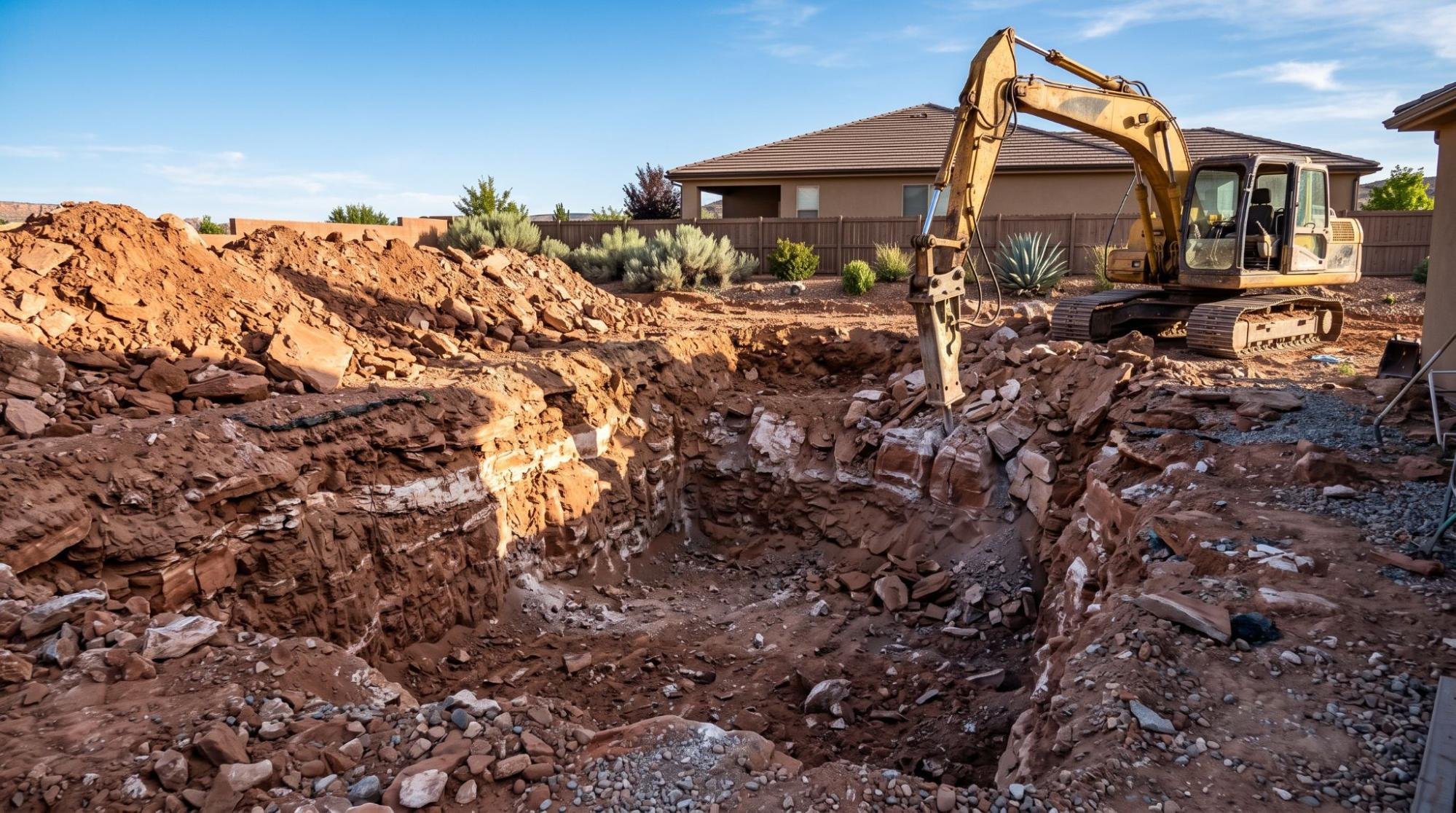
Nothing says summer in St George quite like stepping outside into your own backyard oasis. But before the water goes in, tile gets set, and pool parties begin, there is a critical first phase that determines whether your entire project goes smoothly or turns into a headache. That phase is pool excavation Utah homeowners often underestimate until they are standing in front of a rock wall three feet down.
If you are planning an inground pool anywhere across Washington County, understanding what pool excavation actually involves, and why our local terrain makes it different from digging a pool almost anywhere else in the country, will save you time, money, and a lot of frustration. Here is what you need to know before you sign a contract or pick a pool shape out of a catalog.
What Pool Excavation Actually Involves
Inground pool excavation is the process of digging out the exact shape, depth, and shelving needed for your pool shell, whether that is gunite, fiberglass, or a vinyl liner system. It sounds simple on paper, but the reality involves a lot more planning than most homeowners expect.
A proper backyard excavation for a pool typically includes marking the exact footprint based on approved plans, cutting to precise depths and slopes for shallow and deep ends, creating shelving for benches, tanning ledges, or steps, hauling away the excavated material, and prepping the base for plumbing and structural work. Every one of these steps needs to be done with tight tolerances. A pool that is dug even a few inches off from the engineered plan can cause problems with shell fit, plumbing alignment, or structural stability down the line.
This is why pool excavation St. George UT homeowners choose a contractor with real pool specific experience rather than a general dirt moving crew. There is a meaningful difference between digging a basement and digging a pool.
Why Southern Utah Ground Makes Pool Digs Different
If you have lived in this area for any length of time, you already know our ground does not play by the same rules as softer soil found in other parts of the country.
Rocky soil excavation is one of the biggest challenges homeowners run into when planning a pool. Much of Washington County sits on sandstone, caliche, and dense rock layers just below the surface. What looks like a straightforward backyard on paper can turn into a project requiring specialized breaking equipment once digging actually begins.
A few things that commonly come up during Southern Utah pool excavation projects include hitting solid rock shelves that require hoe ramming or rock breaking attachments, encountering caliche layers that are nearly as hard as concrete, dealing with uneven bedrock depth across a single yard, and needing extra time and equipment that was not part of the original estimate. This is exactly why excavation for pools in our region often costs more, and takes longer, than homeowners expect based on national average pricing they might find online.
Understanding Pool Excavation Cost
Speaking of cost, this is usually the first question homeowners ask, and honestly, one of the hardest to answer with a flat number over the phone.
Pool excavation cost in Southern Utah depends heavily on several site specific factors:
Whether the yard has solid rock, caliche, or workable soil
Access to the backyard for heavy equipment
The size, depth, and shape of the pool being installed
How much excavated material needs to be hauled off site
Whether retaining walls or grading changes are needed around the pool area
A pool going into a flat, easily accessible lot with soft soil is a very different job than one going into a sloped lot with rock and limited equipment access. Any excavation contractor St. George worth hiring should walk your property in person before giving you a real number, rather than quoting blind off a phone call.
The Excavation Process Step by Step
Understanding the general sequence of a pool dig helps set realistic expectations for your timeline.
First comes utility locating, where all underground utility lines are marked before any digging begins. Skipping this step is not just risky, it is often required by law before heavy equipment touches the ground.
Next is obtaining the excavation permit through the appropriate local jurisdiction, along with any pool specific permitting your city requires. Your contractor should be handling or at least guiding you through this process rather than leaving you to figure it out alone.
From there, heavy equipment excavation begins. Depending on soil conditions, this may involve standard excavators, or in rockier yards, specialized attachments designed to break through sandstone and caliche layers. Once the hole is dug to the correct depth and shape, soil compaction is performed around the perimeter to stabilize the surrounding ground before plumbing, steel, and shell work begin.
If your yard has any slope or elevation change, site grading and drainage planning happen alongside the dig itself, since water needs somewhere to go once your pool and surrounding hardscape are complete.
Drainage Planning Around Your New Pool
This is a step that gets overlooked far too often, and it tends to cause the most regret later.
Pool drainage needs to be planned before construction, not figured out after the fact. Water needs a clear path away from the pool equipment pad, the coping, and any surrounding patio or decking. Without proper drainage solutions in place, homeowners can end up with pooling water against the pool wall, erosion around the equipment area, or water intrusion problems that show up during the next big storm.
A contractor experienced in construction site preparation will account for your yard's natural slope, your home's existing drainage, and how the finished pool deck will shed water before a single scoop of dirt comes out of the ground.
When Retaining Walls Become Necessary
Many Southern Utah lots are not perfectly flat, and pools built into sloped yards often require additional structural support.
Retaining walls may be needed to hold back soil on one or more sides of the pool excavation, especially on lots with a noticeable grade change. Our team has handled this exact scenario many times through our rock retaining wall work, which pairs naturally with pool projects on sloped properties throughout the region.
Choosing the Right Excavation Contractor
Not every general contractor or landscaping company has real experience with pool construction excavation, and this is one area where experience genuinely matters.
When evaluating an excavation company for your pool project, a few things separate the professionals from the rest:
Direct experience excavating pools in rocky Southern Utah terrain, not just general dirt work
Proper equipment on hand for rock breaking, not equipment rented after hitting rock mid project
A clear, written scope that accounts for potential rock encountered during the dig
Familiarity with local permitting and utility locating requirements
A track record with residential excavation and residential construction projects similar in scope to yours
Ask any contractor you are considering how they handle unexpected rock during a dig, and how that affects both timeline and cost. Their answer tells you a lot about how prepared they actually are for our local ground conditions. You can see examples of similar site work on our featured projects page.
Common Mistakes Homeowners Make
A few avoidable mistakes tend to show up again and again on pool projects across the region. Choosing a pool shape and depth before consulting with an excavator about the site's soil conditions is a common one, along with assuming a quote from a national pool company already accounts for local rock. Skipping proper utility locating before digging begins, underestimating how much excavated material actually needs to be hauled away, and forgetting to plan drainage around the finished pool deck round out the list.
Any one of these can turn a straightforward new pool installation into a stressful, budget busting experience.
Working With a Local Team That Knows the Ground
Every region has its own quirks, and Southern Utah's rocky, sandstone heavy terrain is one of the more demanding environments for pool digs in the state. Working with a local excavation contractor who has actually dug pools in this specific ground, rather than a crew flying in general dirt experience from somewhere else, makes a real difference in how smoothly your project goes.
Our team has handled everything from straightforward backyard digs to complex, sloped lots requiring rock breaking and land grading before a pool shell could even be set. We understand the ground here because we have been working in it for years.
Final Thoughts
Pool excavation in Southern Utah is not quite the same job it is in other parts of the country, and homeowners who understand that going in tend to have a much smoother experience. From rocky soil and permitting to drainage planning and site grading, every step matters for a pool that holds up for years to come.
If you are planning pool excavation Utah homeowners can trust for your backyard project, reach out to our team before you finalize your pool plans. Getting an experienced excavator involved early is the single best thing you can do to keep your project on time and on budget.
Frequently Asked Questions
-
Pool excavation cost varies significantly based on soil conditions, yard access, and pool size. Rocky or caliche heavy lots generally cost more than sites with workable soil, since rock breaking equipment and additional time are often required.
-
Much of the ground across St. George and surrounding areas sits on sandstone and caliche layers just below the surface. Standard digging equipment often cannot break through these layers efficiently, which is why specialized attachments are commonly needed for rocky soil excavation in this region.
-
Yes. An excavation permit and proper utility locating are typically required before any digging begins, along with any pool specific permitting through your local jurisdiction. A qualified contractor should guide you through this process as part of the project.
-
The timeline depends heavily on soil conditions and pool size. A straightforward dig in soft, accessible soil can move quickly, while a project involving significant rock or a sloped lot requiring retaining walls will naturally take longer.
-
Without proper pool drainage planning, water can pool against the pool wall, erode surrounding soil, or cause water intrusion issues near the equipment pad. Addressing drainage solutions before construction begins helps avoid costly repairs later.
