
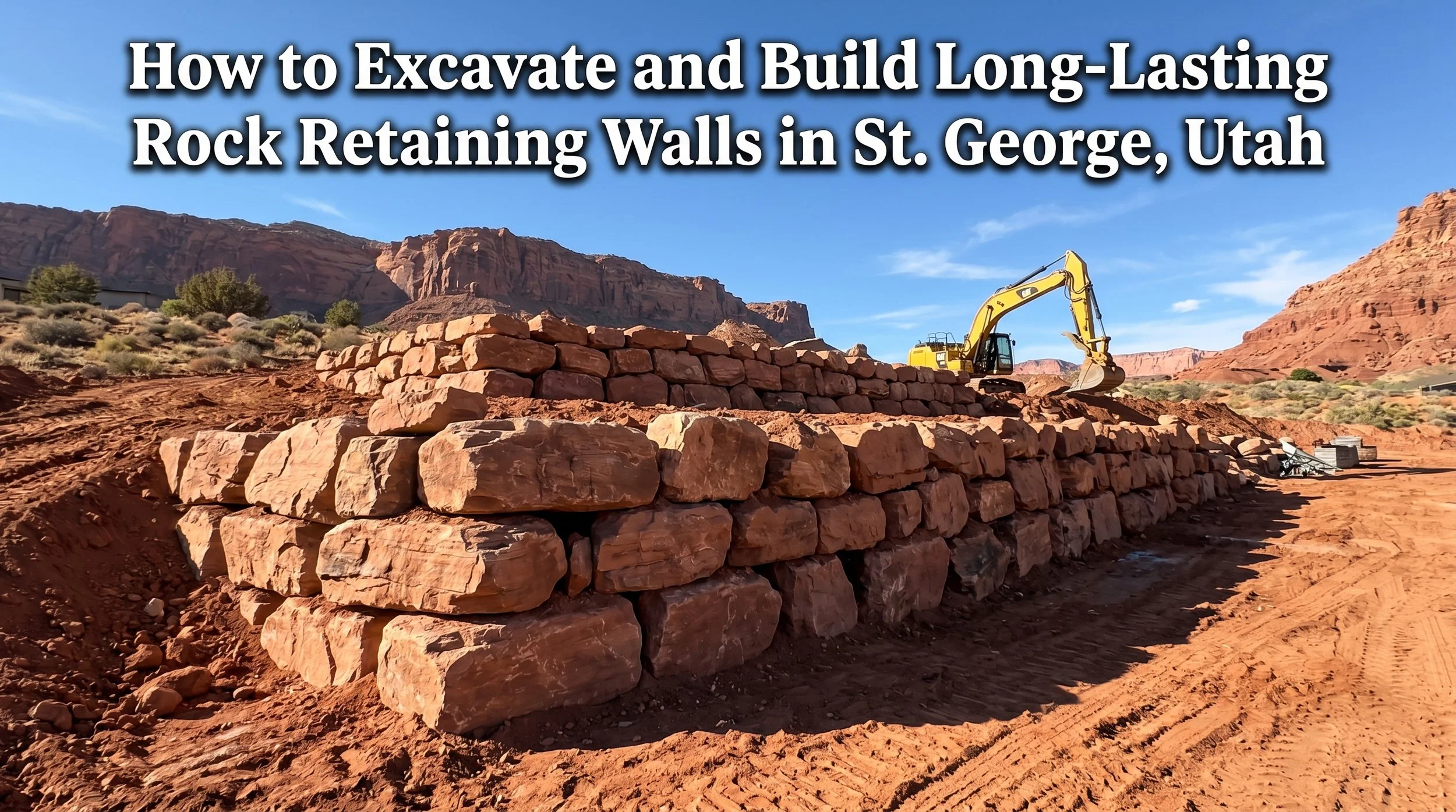
When dealing with the rugged topography of the local landscape, controlling soil erosion and managing dramatic changes in elevation are among the biggest hurdles property owners face. Whether you are prepping a sloped residential lot or safeguarding a commercial development, standard landscaping solutions rarely suffice. To achieve permanent stability and a timeless desert aesthetic, installing high-quality Rock Retaining Walls St. George Utah is the premier method for securing sloped ground across Washington County.
Building a heavy-duty boulder wall is not as simple as stacking stone. It requires a precise combination of heavy machinery operation, deep geological awareness, structural planning, and meticulous water management. This comprehensive technical guide outlines the professional, step-by-step process of excavating, building, and backfilling heavy structural stone features designed to survive the shifting environments of Southern Utah.
The Critical Role of Proper Site Prep and Excavation
Every permanent structure depends on its foundation, and a heavy rock wall is no exception. A common, costly error in residential site development is skipping a formal sub-grade excavation before laying the base course of stones. Given the area's native soil varieties-ranging from dense clay to shifting sands—skipping this foundational phase will guarantee wall failure.
Initial Clearing and Earthmoving
Before deploying heavy equipment, the site must be cleared of native scrub vegetation, organic topsoil, and loose debris. Using specialized machinery, an operator conducts rough Grading and Retaining Wall site preparation to carve clean benches into the sloped terrain. This process removes the driving mass of the hillside, establishing a safe work area and minimizing the landslide risks associated with heavy desert monsoons that hit communities throughout Southern Utah.
Foundation Trench Excavation
Once the hillside is properly benched, an excavator digs a deep foundation trench. The depth of this trench is determined by the ultimate height of the final wall structure. As a standard rule, for walls under four feet, the trench should extend deep enough to bury the entire base layer of stones, which is typically 12 to 18 inches below grade. For taller, Engineered Retaining Walls, the trench depth must align with precise engineering calculations to handle extreme lateral earth pressures.
The base of the excavation trench must be cut into undisturbed, highly consolidated native soil or dense bedrock. If the machine encounters soft, loose dirt or pockets of expansive clay during an active Southern Utah Excavation project, the operator must over-excavate the area, replace it with engineered structural fill, and compact it using heavy vibratory plates to prevent future settling.
Sourcing Materials: Lava Rock vs. Engineered Block
Selecting the correct structural material changes both the appearance and the structural longevity of your project. The unique geological landscape of St. George offers access to highly durable, naturally occurring materials that can withstand severe seasonal temperature swings.
A Lava Rock Retaining Wall is highly favored throughout local neighborhoods like Hidden Valley or The Ledges. These dark, porous volcanic boulders offer incredible density and textural friction, allowing them to interlock naturally when stacked by a skilled excavator operator. They are immune to UV degradation and extreme desert heat, making them a permanent fixture once placed.
Alternatively, if a modern or industrial aesthetic is required, choosing a standard concrete Block Wall St. George Utah provides uniform dimensions that simplify tight residential boundary installations. However, for sheer mass, durability, and raw blending with the natural terrain, large-scale Rock Retaining Walls remain the gold standard across regional building initiatives because they allow for minor natural shifting without cracking structural joints.
Step-by-Step Construction and Boulder Placement
Stacking heavy structural boulders requires a specialized excavator equipped with a hydraulic thumb attachment. This tool allows the operator to lift, rotate, and place stones with absolute precision while maintaining a safe worksite boundary.
Setting the Base Layer
The largest, heaviest boulders are reserved exclusively for the foundation layer. These stones are placed tightly inside the excavated trench. The operator ensures that each boulder sits flush against its neighbor, leaving zero wide structural gaps. This ground layer provides the absolute stabilizing weight for every single stone stacked above it during Excavation St. George Utah infrastructure phases.
Establishing the Inward Batter
A lasting rock wall must never be built perfectly vertical. Instead, it must lean back into the hillside it is supporting. This slope is known as the "batter." A standard safe guideline is an inward lean of 1 inch for every 12 inches of wall height. This angling shifts the center of gravity of the rock face directly into the slope, using the wall's weight to actively counteract forward soil pressure.
Stacking with Interlocking Pockets
As subsequent courses are added, the stones are arranged with a running bond pattern, ensuring that no vertical seams run continuously from top to bottom. Smaller angular stones, or "chink rocks," are driven tightly into the remaining voids between large boulders using the excavator bucket. This mechanical wedge layout locks the major structural stones permanently into position.
The Science of Water Management: Backfilling Techniques
Water accumulation is the leading cause of retaining wall failure worldwide. When desert monsoons strike, dry soil absorbs water rapidly, expanding in volume and increasing lateral weight pressure against the back of the wall. Without an active system to route this water away, hydrostatic pressure will easily push a heavy boulder wall out of alignment.
To protect your investment, Backfilling Retaining Walls requires strict adherence to engineering standards. First, a heavy-duty non-woven geotextile fabric is installed along the back wall of the boulders and extended across the bare dirt slope. This fabric allows water to pass through freely while preventing fine sand and clay from washing forward and clogging the stone gaps. Next, a perforated PVC drain pipe is laid at the bottom of the trench directly behind the base course of boulders, sloped downward to direct collected subsurface water toward an open drainage outlet on the property.
The space directly behind the stones is filled with a clean, 3/4-inch angular drainage aggregate. Avoid using native soil for this immediate backing layer because clean gravel cannot retain water, ensuring that moisture drops straight down into the perforated pipe. As you add more layers of stone, you must simultaneously Backfill a Retaining Wall zone by zone. This material is deposited in thin 6-to-8-inch layers, known as lifts. Each lift undergoes thorough mechanical tamping using specialized soil compaction equipment. Continuous tracking ensures that the Retaining Wall Backfill matches engineered density specs, preventing future soil drop or wall shifting.
Investment Breakdown: Estimating Rock Wall Costs
Because structural landscape work involves substantial earthmoving and raw materials, budgeting for your project requires a clear view of local market variables. On average, the Rock Wall Cost Per Foot typically ranges from $35 to $75+ per square foot, depending on several critical factors.
Site accessibility plays a major role in your overall estimate. If large tandem dump trucks and 20-ton excavators can safely access the footprint, the project moves efficiently. If the job requires smaller machinery due to tight spaces, labor hours will increase. Additionally, utilizing native regional materials reduces shipping fees, whereas importing specialty stones increases structural costs.
Any wall exceeding 4 feet in height generally requires municipal permits, geotechnical soil assessments, and stamped structural plans from a licensed civil engineer. While the upfront Cost to Build a Rock Wall might appear higher than a basic timber layout or a thin modular block configuration, the long-term cost per year of service life is unmatched. A properly engineered stone boulder wall easily outlasts alternative options, boosting your property value while providing durable Erosion Control Walls that withstand severe desert storms.
Why You Need a Professional Local Excavation Contractor
Taking on a major rock wall project as a DIY job or hiring an uncertified contractor often leads to costly construction mistakes. Handling multi-ton boulders requires commercial-grade equipment, specialized rigging, and deep field experience.
Partnering with an experienced team for your Southern Utah Excavation needs ensures that your project benefits from deep knowledge of regional soils, helping to avoid issues with hidden caliche beds or expanding clay layers. They maintain a fleet of modern machinery, including heavy excavators, skid steers, and advanced laser-leveling tools.
Furthermore, established relationships with local rock quarries ensure reliable access to premium materials at competitive prices. From the first trench cut during early Excavation St. George Utah planning to the final compaction pass, choosing a team focused on Quality Excavation St. George Utah guarantees that your property is safe, level, and structurally secure for decades to come.
Frequently Asked Questions
-
Yes, any retaining wall standing over 4 feet tall requires a structural building permit and stamped plans from a licensed civil engineer in St. George.
-
Native volcanic lava rock and regional weathered limestone are the best options because their rough surface textures create a strong mechanical lock.
-
When built with proper sub-grade excavation and a dedicated gravel drainage system, a natural boulder wall can easily last over 50 to 100 years.
-
No, you should never use native dirt directly behind the stones because it retains water; always use clean, angular 3/4-inch crushed gravel for drainage.
-
To safely maneuver a commercial excavator and transport large boulders, a clear access path of at least 10 to 12 feet in width is typically required.
