
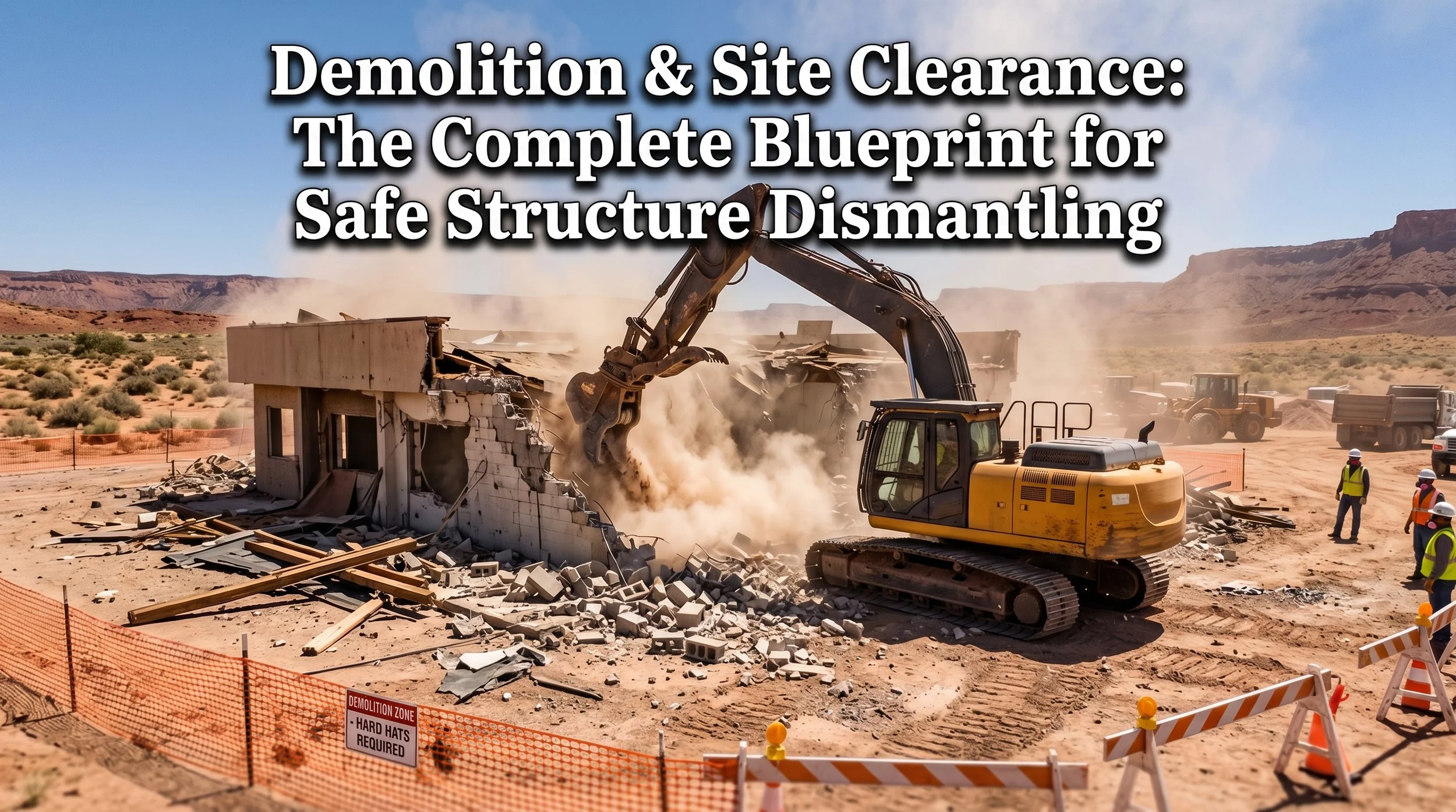
When a Property Owner or Developer looks at a piece of land in Southwestern Utah, they often see the potential for something new. However, before that vision can become a reality, the existing footprint of the past must be addressed. Demolition & Site Clearance is not merely the act of tearing things down; it is a highly controlled engineering process designed to remove physical obstacles while preserving the safety of the environment and the integrity of the neighborhood. In the booming market of St. George, where old structures frequently make way for modern developments, the technical execution of a dismantle is the foundation for everything that follows.
Engaging with professional demolition services St. George Utah ensures that every phase of the project, from the first sledgehammer to the final haul, is handled with meticulous care. This comprehensive blueprint explores the high standards required for structural demolition, the logistics of hazardous waste management, and the precision needed for a clean site handoff.
The Crucial Foundation: Permit Acquisition for Demolition
Every safe dismantlement begins in the office rather than the field. The administrative hurdle of permit acquisition for demolition is designed to protect the Public and the City infrastructure. In Washington County, you cannot simply show up with an Excavator and start swinging. You must coordinate with municipal authorities to ensure all Utility Providers have verified that service lines are dead.
The permit process typically requires:
Verification of gas and electrical disconnects from the Main.
Water and Sewer capping inspections to prevent contamination of the City system.
Dust control plans to mitigate the fine Red Sand and construction dust that can plague St. George neighborhoods.
Traffic management plans if heavy machinery will be blocking public right of ways.
Without these legal protections, a project can be shut down instantly, leading to massive fines and liability for the Property Owner. Professional residential demolition contractors Utah handle these filings as part of their core service, ensuring that the Southwestern Utah excavation team can work without interruption.
Identifying Invisible Threats: Hazardous Material Inspection
Before the physical structural demolition begins, the interior of the building must be audited. Many older homes and commercial buildings in the St. George area were built during eras when asbestos, lead, and other chemicals were standard in construction. A formal hazardous material inspection is the only way to ensure that these toxins do not become airborne during the teardown.
If hazardous substances are detected, they must be removed by a licensed abatement crew before the heavy machinery arrives. This prevents the contamination of the surrounding soil and protects the lungs of the workers and neighbors. In many St. George redevelopment projects, this step is monitored closely by state health officials to ensure that the rubble destined for the landfill is clean and safe.
Advanced Techniques in Structural Demolition and Dismantling
Once the site is cleared of hazards and the permits are taped to the fence, the physical work commences. Modern structural demolition is a surgical process. Unlike the "wrecking ball" methods of the past, today’s contractors use high-reach excavators with specialized attachments to take a building apart piece by piece. This minimizes vibration and noise, which is critical when working in dense residential areas or near historic St. George landmarks.
Selective Interior Demolition
Sometimes, the goal is not to remove the entire building but to "gut" it for a modern remodel. Selective interior demolition involves removing non-structural components like drywall, flooring, cabinetry, and old MEP (Mechanical, Electrical, and Plumbing) systems. This requires a high degree of precision to ensure that the load bearing walls and the exterior envelope of the building remain untouched and structurally sound.
Managing Underground Assets: Concrete Slab Removal and Foundation Excavation
The part of a building you see above the ground is only half the battle. To truly clear a site, the subterranean structures must be addressed. Concrete slab removal is one of the most labor intensive parts of the job. Massive slabs of reinforced concrete must be broken into manageable pieces using hydraulic breakers.
The process of foundation excavation removal involves:
Excavating around the perimeter of the footings to expose the concrete.
Using "Ho-Rams" or hydraulic hammers to shatter the footings.
Pulling out embedded Rebar and Steel for recycling.
Removing deep Piers or Caissons that may have been used to stabilize the building in the local soil.
If these elements are left in the ground, they create "dead spots" that can interfere with future utility trenching or cause the next building’s foundation to settle unevenly. A professional Southwestern Utah excavation team ensures that every ounce of concrete is pulled from the Earth.
Site Decommissioning and Specialized Clearance Tasks
For commercial properties or old industrial sites, the process shifts toward site decommissioning. This is a broad term that includes the removal of parking lots, light poles, signage, and even underground storage tanks.
Asphalt Millings Removal
Old parking lots provide a unique opportunity for sustainability. During asphalt millings removal, the old pavement is ground down into small pieces. These "millings" are highly valuable as they can be repurposed for new road bases or temporary driveways on other St. George construction sites. This reduces the need for new oil based products and lowers the total cost of the project for the Developer.
Swimming Pool Demolition
In residential Southwestern Utah properties, swimming pool demolition is a frequent requirement. Simply filling a pool with dirt is a recipe for disaster; the concrete bowl will collect water and create a swampy, unstable mess. A proper pool dismantle requires the complete removal of the concrete shell and the plumbing, followed by a backfill of engineered soil that is compacted in six inch layers to ensure the ground is as stable as the day it was first dug.
Sustainability in Action: Salvage and Recycling Services
A massive amount of waste is generated during a dismantle, but not all of it belongs in the trash. Leading demolition services St. George Utah emphasize salvage and recycling services. By sorting the debris on-site, contractors can divert a significant percentage of material from the local landfill.
Key materials often salvaged include:
Structural Steel and Copper: High resale value at local recycling centers.
Lumber and Timbers: Older, large-growth wood is often sought after for reclaimed furniture.
Crushed Concrete: Can be used as a stable sub-base for new sidewalks and driveways.
Brick and Stone: Decorative elements can often be reused in the new landscape design.
This focus on recycling is not just good for the environment; it is a core component of the modern St. George redevelopment projects ethos, where efficiency and waste reduction are key metrics of success.
Preparing for the Future: Final Site Clearance and Grading
The ultimate goal of any demolition and site clearance project is to hand over a "blank canvas" to the next Construction Crew. This final pass involves a thorough sweep of the property to remove any lingering wire, wood scraps, or small concrete chunks.
Once the debris is gone, the Southwestern Utah excavation team performs a rough grade of the lot. This ensures that the ground is level, safe for foot traffic, and that water is directed away from where the new foundation will sit. Without this final grading, a cleared lot can quickly become an erosion hazard during a Southern Utah rainstorm.
Ensuring Quality with Every Step
Choosing the right partner for your project means looking for a team that understands the intersection of safety and efficiency. Whether you are dealing with a complex commercial dismantle or a simple residential teardown, the precision of your residential demolition contractors Utah will dictate the pace of your entire build. By prioritizing underground utilities protection and environmental safety, a professional team clears the way for the future of St. George land development.
Frequently Asked Questions
-
Yes. Any structure larger than a small storage shed typically requires a permit to ensure that utilities are properly capped and that dust control measures are in place for the Public.
-
Typically, the inspection and laboratory testing take about one week. If materials like asbestos are found, the abatement process can add another week or more to the timeline.
-
Total demolition removes the entire structure down to the dirt. Selective demolition only removes specific interior components while keeping the exterior walls and roof intact.
-
Absolutely. Many contractors offer on-site crushing services that turn old foundations into high-quality road base or drainage gravel for your new driveway.
-
A full removal ensures that the entire property remains "buildable." If you only do a partial removal, you can never build a heavy structure over that spot because the buried concrete creates a structural void.
